


No products in the cart.
Return To Shop
How to Stop Food from Sticking to Your Grill Plate
If you’ve made the switch from an open-grate barbecue to a solid stainless steel grill plate, you already know the difference in results: more even cooking, better moisture retention, and no more losing pieces of food through the bars. But there’s one question almost every plate-grill owner asks at some point — why does food still stick sometimes, and how do you stop it?
The good news is that sticking on a flat grill plate is almost always preventable. Unlike open grates, a solid plate gives you full, even contact with the food, which actually makes it easier to get consistent, non-stick results once you understand what’s really going on.
Why Food Sticks to a Grill Plate
Sticking happens when proteins in food bond directly to the metal surface. On a flat plate, this bond forms fastest under three conditions: the plate isn’t hot enough yet, there isn’t enough oil between the food and the surface, or the food itself is too wet when it hits the plate. Because a plate has full surface contact (unlike grates, where only part of the food touches metal), getting these three things right matters even more.
Here’s how to get it right every time.
1. Preheat the Whole Plate — Not Just Part of It
One of the biggest differences between grates and a solid plate is heat distribution. A grate heats up in strips; a plate needs time to heat evenly across its entire surface, edge to edge. If you start cooking on a plate that’s hot in the centre but still cool near the edges, food placed on the cooler zones will stick almost immediately.
Give your grill plate a full 10–15 minutes to preheat with the lid down before cooking. A thicker plate (like the 4–6 mm plates used on many quality grills) takes a little longer to heat but holds that heat far more evenly once it gets there — which is exactly why thicker plates tend to give more consistent, non-stick results over a whole cooking session.
2. Oil Both the Plate and the Food
This is the step people most often get wrong — usually by doing only one side of it.
- Oil the plate: once it’s fully preheated, wipe a thin, even layer of high-smoke-point oil (canola, sunflower, or grapeseed) across the surface using tongs and a folded paper towel or a heatproof brush.
- Oil the food: lightly coat meat, fish, or vegetables with oil before they go on. This creates a barrier on both sides of the contact point, not just one.
The goal is a thin, even sheen — not a pool of oil. Too much oil pooling on a flat plate can cause flare-ups and uneven cooking, and it won’t improve your results beyond a light, even coat.
3. Pat Food Dry Before It Touches the Plate
Moisture is one of the most overlooked causes of sticking. Wet food creates steam the instant it touches a hot plate, and that steam interferes with the sear that would otherwise release the food naturally. This matters even more on a solid plate than on grates, since there’s nowhere for excess moisture to drip away before contact.
Pat meat, fish, and vegetables dry with a paper towel before oiling and placing them on the grill. This is especially important for chicken, fish fillets, and marinated cuts, all of which hold extra surface moisture.
4. Give Food Room to Sit
Overcrowding a grill plate does two things: it drops the surface temperature in that section, and it traps steam underneath the food with nowhere to escape. Both of these increase sticking. Leave a small gap between pieces so heat stays consistent and moisture can escape rather than pooling under the food.
If you’re cooking in batches — say, searing meat first and then vegetables — give the plate a minute to come back up to full temperature between batches.
5. Let a Crust Form Before You Move Anything
Just like with grates, the biggest mistake on a flat plate is trying to move or flip food too early. When food first touches the plate, it needs a minute or two undisturbed to sear. That sear is what naturally releases food from the metal — moving it too soon tears straight through a crust that hasn’t finished forming.
A simple test: if food doesn’t lift with a light, gentle nudge from your spatula, give it another 30–60 seconds before trying again.
6. Keep Grease Flowing, Not Pooling
On a flat plate, grease and juices don’t fall away the way they do through open grates — they need somewhere to go. If your grill has a slope toward a drainage channel or removable grease tray, keep it clear and check it during longer cooking sessions. A plate sitting in a pool of its own grease heats unevenly and is far more prone to sticking, especially around the edges where grease tends to collect.
7. Clean and Re-Oil After Every Use
Post-cook maintenance is where long-term non-stick performance is won or lost.
- Clean while the plate is still warm. Residue scrapes off far more easily warm than once it’s cooled and hardened.
- Wipe with a thin layer of oil before storing. This protects stainless steel from moisture and prevents the light rust or dullness that can develop on an unprotected surface — and rough, oxidised spots stick far more than a smooth, well-maintained plate.
- Avoid abrasive scouring pads on a regular basis. They can create fine scratches that build up over time, giving food more microscopic surface area to grip onto.
Quick Reference Checklist
- Preheat the entire plate for 10–15 minutes, lid down
- Oil the plate and the food — a thin, even layer on both
- Pat food dry before it goes on
- Leave space between pieces
- Let a proper sear form before flipping or moving food
- Keep grease draining, not pooling
- Clean warm, then re-oil before storing
The Role of Your Grill Plate Itself
Technique matters most, but the plate you’re cooking on plays a role too. A thicker, well-designed stainless steel plate with even heat distribution and a clear path for grease drainage will naturally resist sticking far better than a thin, unevenly heated one — and it will hold that performance for years rather than months.
Get these fundamentals right, and sticking stops being something you have to think about. Instead, you’re left with clean releases, better sears, and a lot less scraping once the cooking is done.


About author

Related posts
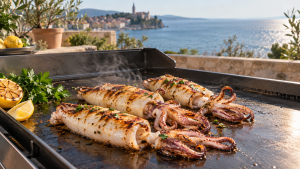
Grilled squid looks simple, but small mistakes can quickly make it tough and rubbery. When cooked correctly, squid should be lightly browned on the outside... Continue reading
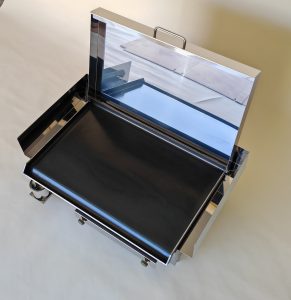
When choosing a grill, most people focus on size, power and the number of burners. But one of the most important parts is often overlooked:... Continue reading

Cooking a good steak may seem simple, but the difference between an average result and an excellent one often comes down to small details. The... Continue reading

Grilling doesn’t have to stop when the weather turns. A gas grill will happily run through autumn, winter, and windy coastal evenings — but cold... Continue reading

If there’s one step that separates a good grilled meal from a great one, it’s preheating. It’s also one of the most commonly skipped steps... Continue reading

Add comment