


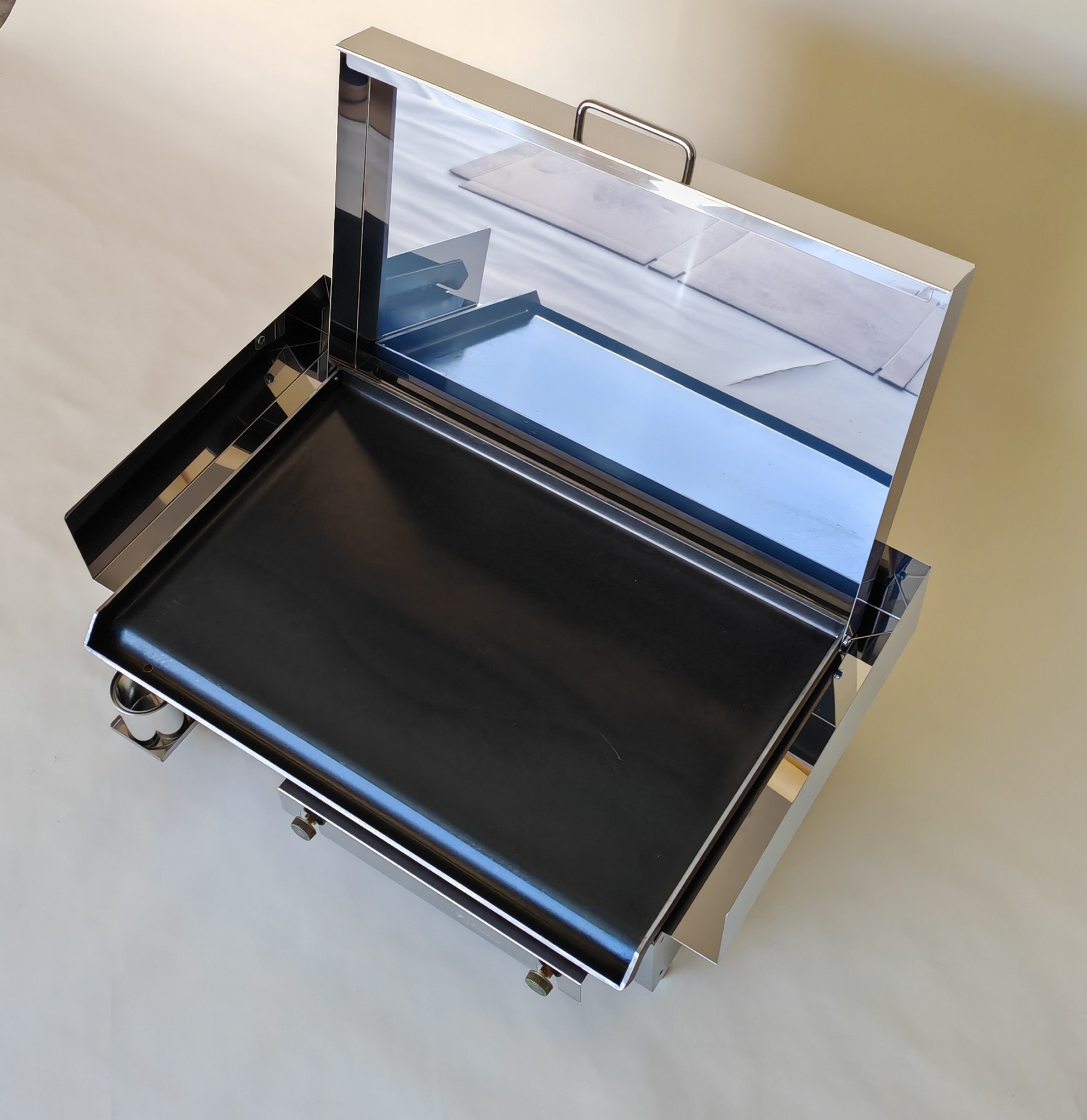
When people search for a “stainless steel plate grill,” they’re usually looking for the same thing: fast heat-up, a strong sear, and cooking without sticking. At Furlan, we don’t use stainless cooking plates — we use a quality steel plate, because it performs exceptionally well at high heat and delivers what you expect from a premium grill: great searing, clean control, and consistent results.
In this guide you’ll learn why steel, how to prep the plate, how to cook different foods (including fish), and how to clean and protect the surface so it stays in top condition.
Why a steel plate performs so well
A steel plate heats up quickly, holds temperature well, and makes it easy to build a beautiful crust. That means:
-
a better sear and better flavor
-
stable cooking even when you load the plate with food
-
easy spatula work and fast cleanup
With proper heat and a light oil film, cooking is clean, controlled, and non-stick.
5 steps before cooking (so nothing sticks)
1) Preheat properly
The most common mistake is cooking on a plate that isn’t hot enough. Give it time to reach temperature.
2) Do the “water drop test”
A drop of water should skitter and evaporate quickly. That’s a good sign you’re close.
3) Use a little oil — the right way
Apply a thin, even film of oil (e.g., canola/rapeseed or sunflower). You don’t need much.
4) Keep food dry
Wet food releases water and starts steaming instead of searing. Pat it dry before it hits the plate.
5) Don’t move it too soon
Let the crust form. When it’s ready, it will release naturally.
What to cook on a steel plate
A steel plate is perfect for:
-
burgers, sausages, smash patties
-
steaks and sliced meats
-
vegetables (zucchini, peppers, onions)
-
fish and seafood (sea bass, sea bream, salmon, squid, shrimp)
-
eggs, cheese, tortillas / toasted sandwiches
Fish on a steel plate (quick guide)
Fish can turn out incredible on a steel plate — the key is proper heat and a light oil film.
How to prevent sticking:
-
Preheat well (use the water drop test).
-
Pat the fish dry (dry surface = better sear).
-
Lightly oil the fish (or apply a very thin film on the plate).
-
Place the fish down and don’t move it until a crust forms.
-
Flip once, finish briefly, then remove.
Best choices for the plate:
sea bream, sea bass, salmon, tuna steak, squid, and shrimp.
Want consistent results without guesswork?
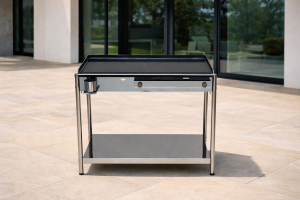
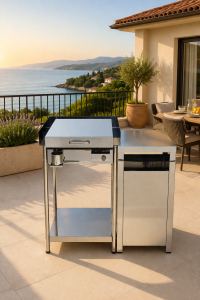
Choose a steel plate gas grill in the right size for your needs — from compact models for patios to larger setups for gatherings.
Explore Furlan gas grills and choose your model.
Cleaning after cooking (fast and effective)
It’s easiest while the plate is still warm:
-
scrape residues with a scraper/spatula
-
wipe with paper towels
-
add a small splash of water for steam (optional) and scrape again
-
wipe dry
Most important: protect the surface after cleaning
When the plate is dry, apply a very thin film of oil. This is the simplest way to keep the surface looking great and performing well.
Common mistakes (and the fix)
-
Plate isn’t hot enough → preheat longer
-
Too much oil → use a thin film
-
Food is wet → pat dry first
-
Moving too early → wait for the crust to form
-
Skipping the post-cook oil film → always add a light protective coat
“Stainless” in search — steel in real cooking
“Stainless plate” is a popular online phrase, but real performance comes from heat, technique, and maintenance. That’s why Furlan uses a steel plate — for strong searing, control, and a truly premium cooking experience.
Ready for premium outdoor cooking at home?
If you want a grill that heats fast, cooks evenly, and is easy to maintain, a steel plate setup is the right choice.
See our best-selling Furlan gas grills and pick the one that will serve you for years.
FAQ
Does food stick to a steel plate?
With proper preheating and a thin oil film, food typically won’t stick. Also avoid moving food too early.
How do I clean a steel plate after cooking?
While warm, scrape, wipe, add a little water for steam if needed, scrape again, then wipe completely dry.
Do I need to oil the plate after cooking?
Yes — a very thin oil film after cleaning is the best protection and helps keep performance consistent.
Can I cook fish on a steel plate?
Yes. Preheat well, pat fish dry, use a thin oil film, and don’t move it until a crust forms.


Add comment