


No products in the cart.
Return To Shop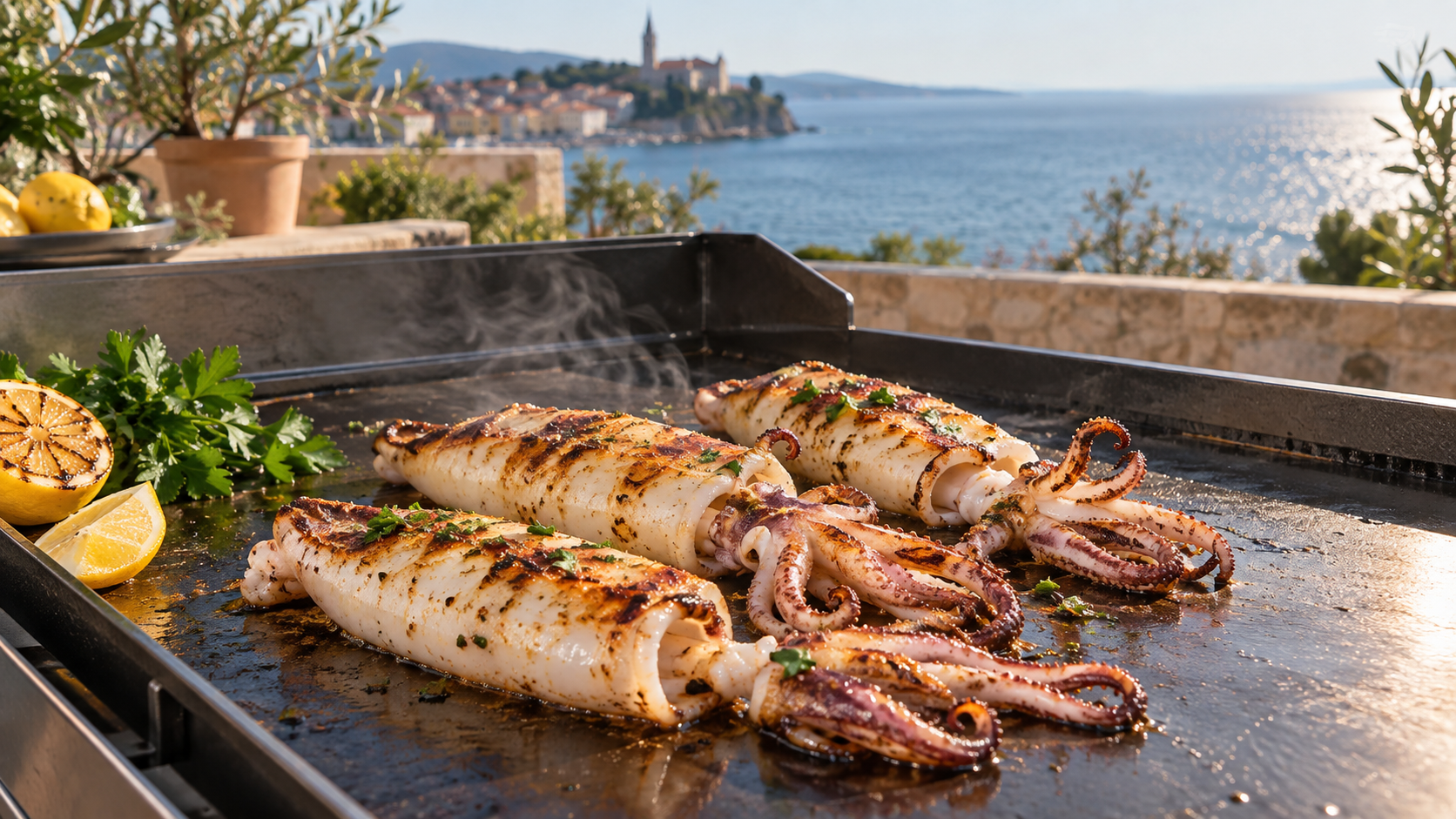
Grilled Squid: How to Cook It on a Gas Grill Without Turning Rubbery
Grilled squid looks simple, but small mistakes can quickly make it tough and rubbery. When cooked correctly, squid should be lightly browned on the outside while remaining tender and juicy inside.
You do not need a complicated marinade. The key is a properly preheated cooking plate, thoroughly dried squid, enough space between the pieces and a short, controlled cooking time.
Quick answer: Dry the squid thoroughly, preheat the steel cooking plate to approximately 220–240°C (430–465°F) and cook in small batches. Medium squid tubes usually need 2–3 minutes on the first side and 1–2 minutes on the second. Add garlic, parsley and lemon after cooking.
Grilled squid recipe
| Servings | 4 |
|---|---|
| Preparation time | Approximately 15 minutes |
| Cooking time | Approximately 3–5 minutes per batch |
| Equipment | Gas grill with a smooth steel cooking plate, tongs and paper towels |
Ingredients
- 800 g (approximately 1.75 lb) cleaned squid of a similar size
- 1–2 tablespoons high-heat cooking oil
- 2 garlic cloves, finely chopped
- 2 tablespoons fresh chopped parsley
- 2–3 tablespoons extra virgin olive oil for finishing
- Juice of half a lemon
- Salt and freshly ground black pepper
Why does grilled squid become rubbery?
The most common cause is overcooking. Squid can also become tough when the cooking plate is not hot enough or when too much cold food is added at once.
Wet squid rapidly lowers the surface temperature. Instead of browning, the squid releases water and begins to steam in its own liquid. This extends the cooking time and increases the risk of a rubbery texture.
The most common mistakes are:
- Cooking squid while it is wet or still partially frozen
- Placing it on a cooking plate that is not fully preheated
- Overcrowding the cooking surface
- Moving the squid immediately after it touches the plate
- Allowing garlic or a sugary marinade to burn
- Cooking every size for the same amount of time
- Extending the cooking time because you are unsure whether it is ready
How to grill squid on a gas grill
1. Thaw and dry the squid completely
Thaw frozen squid slowly in the refrigerator. Clean and briefly rinse it, then dry it thoroughly with paper towels. Remember to dry the inside of each tube as well.
Removing surface moisture is essential. Wet squid cools the cooking plate and produces steam, making browning much more difficult.
2. Prepare evenly sized pieces
Small squid can be left whole. Larger tubes can be lightly scored on one side in a shallow diamond pattern, without cutting all the way through. Separate the tentacles and group the pieces by size because tentacles and smaller pieces usually cook faster.
3. Prepare the finishing sauce separately
Mix the chopped garlic, parsley, extra virgin olive oil and lemon juice in a small bowl. Keep this mixture away from the cooking plate until the squid is ready. Garlic can burn quickly on a hot steel plate and develop a bitter flavour.
4. Preheat the steel cooking plate
Preheat the clean cooking plate for approximately 10–15 minutes, or until the entire surface is evenly hot. If you are using an infrared thermometer, start at approximately 220–240°C (430–465°F).
The squid should sizzle immediately when it touches the plate. The oil should not be producing heavy smoke.
5. Apply only a thin layer of oil
Apply a very thin film of high-heat cooking oil to the plate. The squid should not be sitting in a pool of oil. If it has already been lightly oiled in a bowl, additional oil may not be necessary.
6. Cook in small batches
Arrange the squid in a single layer and leave some space between each piece. Do not move it during the first 60–90 seconds. This uninterrupted contact helps the surface brown. Overcrowding traps moisture and causes the squid to steam instead of sear.
7. Turn only once
For cleaned squid tubes approximately 10–15 cm (4–6 inches) long, begin with 2–3 minutes on the first side and 1–2 minutes on the second. Small squid and tentacles may be ready in 2–3 minutes total.
These times are a starting point rather than a guarantee. Larger pieces, a cooler plate or a heavier batch may require an adjustment.
The squid is ready when it is opaque, lightly golden-brown and firm but still flexible. For food safety, the thickest part should reach at least 63°C (145°F).
8. Season and serve immediately
Transfer the squid to a warm plate. Season it with salt and pepper, then spoon over the olive oil, garlic, parsley and lemon mixture. Serve immediately for the best texture.
Grilled squid cooking times
| Squid size | Starting time | What to look for |
|---|---|---|
| Small squid and tentacles | 2–3 minutes total | Quickly turns opaque with light browning. |
| Medium tubes, 10–15 cm or 4–6 inches | 2–3 minutes plus 1–2 minutes | Browned surface with a firm but flexible centre. |
| Large or stuffed squid | Requires a separate method | Use more moderate heat and check the internal temperature. |
Cooking times are approximate. Squid size, starting temperature, cooking plate temperature, weather conditions and batch size can all affect the result.
Steel cooking plate or grill grate?
A smooth steel cooking plate is particularly practical for small squid and tentacles. Food cannot fall through the gaps, contact with the hot surface is consistent and the pieces are easy to turn.
A traditional grate creates distinctive grill marks and allows liquid to drain away, but smaller pieces require more careful handling. For mixed squid sizes and larger batches, a steel cooking plate often provides more predictable results.
Can squid be cooked on an electric grill?
Yes. The same basic method works on an electric grill with a smooth cooking plate: dry the squid thoroughly, fully preheat the grill and cook in small batches.
After cold food is added, an electric grill needs enough time and power to restore the cooking temperature. Avoid covering the entire surface at once. For squid, the stability and temperature of the cooking plate matter more than whether the heat comes from gas or electricity.
Fresh or frozen squid?
Both can produce excellent results. Frozen squid should be completely thawed in the refrigerator, drained and thoroughly dried before cooking. When buying fresh squid, check its appearance, smell and traceability. Keep it properly chilled until you are ready to cook.
Consistent results start with a stable cooking plate
The quality of a grill becomes immediately noticeable when cooking squid. Cold spots, slow temperature recovery and an overcrowded surface produce more steam and less browning.
Furlan gas and electric grills are developed and manufactured in Slovenia, EU, for home, hospitality and professional use. When choosing a grill, consider the quality and thickness of the cooking plate, heat distribution, cooking area and ease of cleaning.
Explore Furlan gas grills or view our electric grills. For help choosing the right model, contact us at +386 30 667 000.
Frequently asked questions about grilled squid
How long should squid cook on a gas grill?
Medium cleaned squid tubes approximately 10–15 cm (4–6 inches) long usually need 2–3 minutes on the first side and 1–2 minutes on the second. Small squid and tentacles may be ready in 2–3 minutes total.
What temperature should I use for grilled squid?
Preheat the steel cooking plate to approximately 220–240°C (430–465°F). The squid should sizzle immediately when it touches the surface. Its thickest part should reach at least 63°C (145°F).
Why does squid become rubbery?
The most common cause is overcooking. A cooking plate that is not hot enough, wet squid and an overcrowded surface can also extend the cooking time and produce a tougher texture.
How do I stop squid from releasing too much water?
Thaw it completely, drain it and dry it thoroughly with paper towels. Use a fully preheated cooking plate and leave enough space between the pieces.
Should squid be marinated before grilling?
Marinating is optional. Squid can be lightly coated with cooking oil before grilling. Garlic, parsley, lemon and extra virgin olive oil are best added after cooking.
Can I grill frozen squid?
Frozen squid must first be completely thawed in the refrigerator. Drain and dry it thoroughly before placing it on the grill. Partially frozen squid will rapidly cool the cooking plate.
Is a steel cooking plate or grate better for squid?
A steel cooking plate makes smaller squid and tentacles easier to handle and provides consistent contact with the hot surface. A grate creates stronger grill marks but requires more careful turning.
Can squid be cooked on an electric grill?
Yes. Use an electric grill with a smooth cooking plate, preheat it thoroughly and cook in small batches so the surface temperature does not fall too quickly.
How can I tell when grilled squid is ready?
Properly cooked squid is opaque, lightly golden-brown and firm but still flexible. Overcooked squid becomes noticeably tough and rubbery.
When should I add salt, garlic and lemon?
Salt can be added immediately before or after cooking. Add garlic, parsley, lemon juice and extra virgin olive oil after the squid leaves the grill to preserve their fresh flavour and prevent burning.
About author

Related posts

Cooking a good steak may seem simple, but the difference between an average result and an excellent one often comes down to small details. The... Continue reading

Grilling doesn’t have to stop when the weather turns. A gas grill will happily run through autumn, winter, and windy coastal evenings — but cold... Continue reading

If you’ve made the switch from an open-grate barbecue to a solid stainless steel grill plate, you already know the difference in results: more even... Continue reading

If there’s one step that separates a good grilled meal from a great one, it’s preheating. It’s also one of the most commonly skipped steps... Continue reading

Add comment