


No products in the cart.
Return To Shop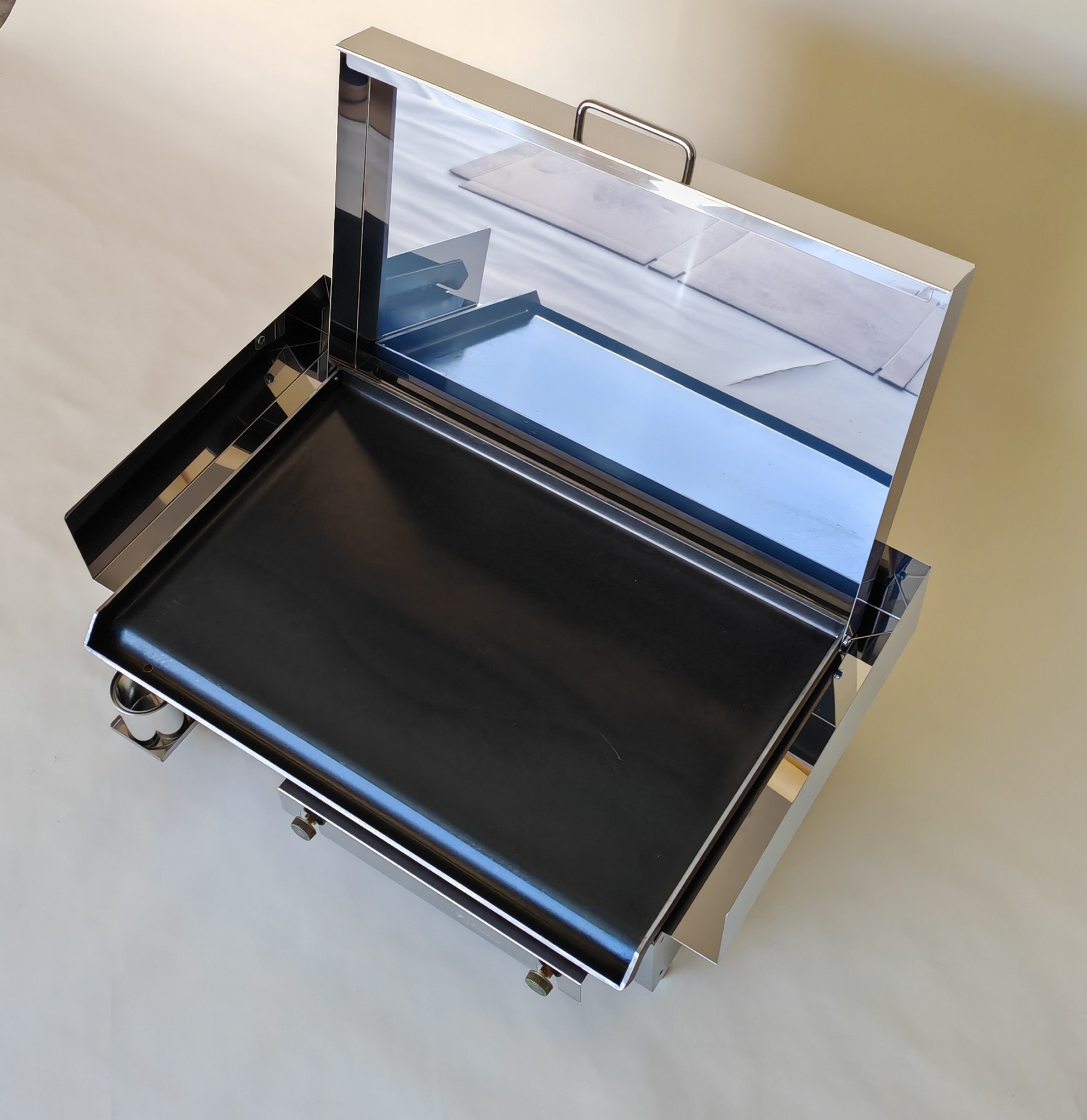
Steel Plate, Stainless Steel Plate or Grill Grate: Which Is Best?
When choosing a grill, most people focus on size, power and the number of burners. But one of the most important parts is often overlooked: the surface you actually cook on.
The three most common options are a steel cooking plate, a stainless steel cooking plate and a traditional grill grate. At first, the difference may seem to be mainly about material or appearance. In practice, however, the cooking surface affects heat transfer, searing, versatility and the types of food you can prepare comfortably.
If you are looking for versatility, strong searing and a solid cooking surface for a wide range of foods, a steel cooking plate offers significant advantages. A stainless steel plate is attractive mainly because of its high corrosion resistance and easier maintenance, while a traditional grill grate is most useful when you specifically want classic grill marks.
At Furlan, this is why we use a solid steel cooking plate rather than a stainless steel cooking plate as the main cooking surface on our grills. Steel provides the cooking characteristics we want for strong searing, reliable performance and versatile outdoor cooking.
You can read more about this in our guide to steel plate gas grills and how to use them properly.
Quick answer: If you want one surface that can handle meat, burgers, vegetables, fish, seafood, eggs and many other foods, a steel cooking plate is an excellent all-round choice. Stainless steel has an important advantage in corrosion resistance, but being stainless does not automatically make it a better cooking surface. A grill grate is best suited to cooks who particularly want traditional grill marks.
What Is the Difference Between a Steel Plate, Stainless Steel Plate and Grill Grate?
The main differences come down to material, contact with the food and the way heat reaches the food.
Steel and stainless steel cooking plates are both solid, flat surfaces. This means that a large part of the food is in direct contact with heated metal.
A grill grate has an open construction, so the food touches the hot metal only along the bars of the grate.
There is also an important difference between a regular steel cooking plate and a stainless steel one.
Steel Cooking Plate
A steel plate absorbs and stores heat and transfers it directly to the food through a large contact area. Once properly preheated, it provides an excellent surface for strong and even browning.
That makes it particularly suitable for:
- steaks,
- smash burgers,
- sausages,
- seafood,
- eggs and bacon,
- smaller pieces of food.
Its biggest advantage is versatility. You can prepare very different foods on the same cooking surface without worrying about small ingredients falling between gaps.
This is one of the main reasons why Furlan gas grills use solid steel cooking plates. For more on the advantages of this type of cooking, see The Benefits of Cooking on a Steel Plate.
Stainless Steel Cooking Plate
Stainless steel has one very clear advantage: excellent resistance to corrosion.
This is why it is widely used for grill components such as housings, lids, legs, work surfaces, shields and other parts that may be exposed to moisture and outdoor conditions.
However, corrosion resistance is not the only property that matters when choosing a cooking plate.
Steel and common stainless steels behave differently when heated. Stainless steel is an excellent material when corrosion resistance and easier maintenance are the priorities, but that does not automatically make it the better material for the actual cooking surface.
The performance of any cooking plate also depends on factors such as:
- the type of steel,
- plate thickness,
- burner design,
- heat distribution,
- overall grill construction.
So it is useful to separate two different questions:
Stainless steel can be the better choice when corrosion resistance and low maintenance are the priority, while a steel cooking plate can be the better choice when cooking performance, searing and versatility are the priority.
Grill Grate
A traditional grill grate works differently.
The food does not sit on a full metal surface. Instead, it touches the heated metal only along the bars of the grate.
This creates the characteristic dark grill marks many people associate with traditional barbecuing.
That is the grate’s main advantage.
If your priority is the traditional appearance of a steak, burger or vegetables with clearly defined grill marks, a grate can produce that effect very well.
However, an open grate is not as versatile as a solid cooking plate.
Small ingredients can fall through the gaps. Delicate foods require more care, and some dishes — such as eggs or a true smash burger — are difficult or impossible to prepare directly on a traditional grate without another cooking surface.
Why Is a Steel Cooking Plate Such a Good Choice?
When we compare all three options primarily from the perspective of what you can actually cook, the steel plate has one particularly strong advantage: versatility.
You can prepare almost an entire meal on one surface.
1. Large Contact Area
With a solid plate, almost the entire underside of the food is in direct contact with hot metal.
This creates excellent conditions for browning and searing meat, burgers and many other foods.
On a grill grate, intense contact with the metal occurs mainly along the bars. That produces attractive grill marks, but not the same full-surface sear.
2. Excellent for Smash Burgers
A smash burger is one of the clearest examples of where a flat steel cooking surface has an advantage.
The meat is pressed firmly against the hot plate, creating maximum contact between the meat and the cooking surface.
This helps develop the thin, deeply browned crust that defines a proper smash burger.
A traditional open grate cannot create the same type of contact because the cooking surface is interrupted by gaps.
3. Small Foods Cannot Fall Through
On a traditional grate, sliced onions, mushrooms, peppers, prawns or small pieces of meat can be awkward to manage.
On a steel cooking plate, this problem disappears.
You can move ingredients freely around the cooking surface and turn them with a suitable spatula without worrying about food falling between the burners.
4. From Steak to Breakfast
A solid steel plate dramatically expands what you can prepare outdoors.
You can cook:
- burgers,
- prawns and seafood,
- vegetables,
- eggs,
- pancakes.
The grill therefore becomes more than a place to cook meat. It becomes a versatile outdoor cooking surface.
If this is the type of outdoor cooking you are looking for, explore our range of Furlan gas grills with solid steel cooking plates.
Steel Plate vs Stainless Steel Plate: Which Is Better?
This is an important question because many buyers automatically associate stainless steel with higher quality.
For many parts of a grill, stainless steel is indeed an excellent material. Its resistance to corrosion makes it particularly useful for housings, lids, legs, protective elements and other parts exposed to outdoor conditions.
But the cooking plate has a different job.
Its main purpose is not simply to resist weather. It must receive heat, distribute it across the cooking area and transfer that heat effectively to the food.
This is why the material should be chosen according to the function of the component, rather than simply assuming that stainless steel is automatically better everywhere.
Advantages of a Steel Cooking Plate
- excellent for strong searing,
- good heat retention,
- stable cooking performance when properly designed,
- large contact area with food,
- suitable for a very wide range of dishes,
- excellent for burgers and smash burgers,
- suitable for both demanding home and professional use.
Advantages of a Stainless Steel Cooking Plate
- excellent corrosion resistance,
- less sensitive to moisture,
- easier to protect and maintain,
- clean and attractive appearance.
If your main priority is the lowest possible maintenance, stainless steel has a clear advantage.
If the main priority is how the surface performs during intensive cooking, a properly designed steel plate has very strong advantages.
This is also why Furlan uses steel for the main cooking plate while stainless steel is used where its corrosion-resistant properties are particularly valuable.
Does a Steel Cooking Plate Have Any Disadvantages?
Yes.
A steel cooking plate requires a little more regular care than stainless steel.
Because it is not stainless steel, the surface should be properly cleaned, dried and protected after use.
The important part is that this maintenance is simple.
After cleaning and thoroughly drying the plate, apply a light coating of cooking oil over the surface. The thin layer of oil helps protect the steel against moisture and surface corrosion.
If you make this part of your normal cleaning routine, the plate remains protected and rust should not be a concern in normal use with proper regular maintenance.
In simple terms:
clean it, dry it and apply a thin layer of oil.
Doing this regularly protects the surface and helps keep the steel cooking plate ready for long-term use.
For a more detailed cleaning routine, see our guide on How to Clean a Steel Grill Plate After Cooking.
Steel Plate, Stainless Steel Plate or Grill Grate: Quick Comparison
| Feature | Steel Cooking Plate | Stainless Steel Cooking Plate | Grill Grate |
|---|---|---|---|
| Contact with food | Very large, almost full-surface | Very large, almost full-surface | Mainly along the bars |
| Searing | Excellent and even | Very good, depending on design | Concentrated at contact points |
| Heat retention | Very good | Good, depending on material and thickness | Depends on material and construction |
| Smash burgers | Excellent choice | Very good | Less suitable |
| Steak | Excellent for an even crust | Very good | Excellent for traditional grill marks |
| Fish | Very suitable | Very suitable | Better suited to firmer pieces |
| Vegetables | Excellent, including small pieces | Excellent | More practical for larger pieces |
| Small ingredients | Excellent | Excellent | Less practical; food can fall through |
| Eggs and breakfast | Yes | Yes | Not directly |
| Sausages | Very suitable | Very suitable | Very suitable |
| Traditional grill marks | No | No | Yes |
| Corrosion resistance | Requires regular care | Excellent | Depends on material |
| Maintenance | Requires cleaning, drying and light oiling | Easier | Depends on construction |
| Versatility | Very high | High | More limited |
| Main advantage | Cooking performance, searing and versatility | Corrosion resistance | Traditional grill marks |
Why Does Furlan Use a Steel Cooking Plate?
At Furlan, we do not use a stainless steel cooking plate simply because the words “stainless steel” may sound more premium.
For us, the more important question is:
How will the grill actually perform when you cook on it?
That is why our gas grills use solid steel cooking plates designed for reliable heat retention, stable cooking and strong searing.
Stainless steel still has an important role in the grill.
It is highly suitable for parts where corrosion resistance and easy maintenance are especially valuable, such as:
- lids,
- legs,
- protective shields,
- housings,
- other structural and external components.
For the main cooking surface, however, we choose steel because its characteristics suit the type of cooking performance we want from a Furlan grill.
To learn more, read Steel Plate Gas Grill: Why It’s a Smart Choice and How to Use It Properly.
What About Grill Grates — Are They Worse?
We would not say that grill grates are bad.
They simply have a more specific purpose.
Their main advantage is the traditional grill-mark effect. If that is exactly the result you want, a grate can work very well.
However, when we compare the number of different foods that can be prepared easily, a solid cooking plate offers significantly more possibilities.
On a traditional grate, it is more difficult to cook:
- eggs,
- finely chopped vegetables,
- small seafood,
- smash burgers,
- small or delicate ingredients.
A grill grate is therefore best understood as a surface for a particular style of grilling, while a steel plate is a more versatile primary cooking surface.
So Which Cooking Surface Is the Best?
If we had to choose one cooking surface for the widest possible range of outdoor cooking, we would choose a steel cooking plate.
It can handle meat, fish, burgers, vegetables, seafood, eggs and many other foods, while providing a large direct-contact area for excellent browning and searing.
A stainless steel cooking plate is attractive for users who place very high importance on corrosion resistance and want less maintenance. But stainless steel does not automatically mean better cooking performance.
A grill grate remains a good choice when traditional grill marks are the main priority, but it is more limited when it comes to the variety of foods you can prepare directly on the surface.
For anyone who wants to use a grill as a truly versatile outdoor cooking appliance, a quality steel cooking plate is very difficult to beat.
Explore our range of Furlan gas grills with solid steel cooking plates to find the size and configuration that best suits the way you cook.
Frequently Asked Questions About Steel Plates, Stainless Steel Plates and Grill Grates
Is a Steel or Stainless Steel Cooking Plate Better?
If your main priorities are cooking performance, searing and versatility, a quality steel cooking plate is an excellent choice. A stainless steel plate has a clear advantage in corrosion resistance and requires less protection from moisture. Which is better therefore depends on your priorities. At Furlan, we choose steel for the main cooking surface.
Why Does Furlan Use Steel Instead of a Stainless Steel Cooking Plate?
We want a cooking surface that provides strong searing, reliable heat retention and stable cooking performance. Stainless steel is used where its corrosion resistance is especially useful, while steel is our preferred material for the main cooking plate.
Can a Steel Cooking Plate Rust?
Steel requires proper care and protection from prolonged exposure to moisture. After use, clean and thoroughly dry the plate, then apply a thin layer of cooking oil across the surface. The oil helps protect the steel from moisture and corrosion.
If the plate is regularly cleaned, dried and lightly oiled after use, you should not need to worry about rust during normal use with proper maintenance. This simple routine helps keep the steel cooking plate protected and ready for long-term use.
Is a Steel Cooking Plate Good for Steak?
Yes. The large contact area allows the meat to develop strong, even browning, which makes a steel cooking plate particularly suitable for steak.
Is a Steel Plate Good for Smash Burgers?
Yes. A steel plate is one of the best surfaces for smash burgers because the meat can be pressed directly against the hot metal, creating maximum contact and a deeply browned crust.
Can You Cook Fish and Vegetables on a Steel Plate?
Yes. Versatility is one of the main advantages of a solid steel plate. It works particularly well for fish fillets, seafood, sliced vegetables and small ingredients that can be awkward to cook on an open grate.
Is a Grill Grate Better Than a Steel Plate?
A grate has a clear advantage when traditional grill marks are the priority. For versatility, full-surface searing and cooking foods such as burgers, fish, vegetables, eggs and smaller ingredients, a steel cooking plate is generally more practical.
Does a Steel Cooking Plate Require a Lot of Maintenance?
No. Regular maintenance is simple: clean the plate after use, dry it thoroughly and apply a thin layer of cooking oil. Doing this consistently protects the surface and helps prevent corrosion.
Conclusion: Why Choose a Steel Cooking Plate?
Steel cooking plates, stainless steel cooking plates and grill grates all have their own strengths.
But if the main criteria are cooking performance and versatility, a steel cooking plate makes a very strong case.
It provides a large direct-contact surface, excellent browning and the freedom to prepare a wide range of foods — from steaks and burgers to fish, vegetables, seafood and breakfast.
A stainless steel plate is excellent from a corrosion-resistance perspective, but stainless steel alone does not guarantee better cooking results.
A grill grate remains useful for cooks who particularly want traditional grill marks, but it does not offer the same flexibility as a solid cooking plate.
This is why Furlan uses solid steel cooking plates as the main cooking surface on our grills.
If you want a grill that can do much more than cook traditional meat over an open grate, explore our range of Furlan gas grills.

About author

Related posts

If you’ve made the switch from an open-grate barbecue to a solid stainless steel grill plate, you already know the difference in results: more even... Continue reading
What Makes a High-Quality Gas Grill? 10 Features You Should Never Overlook Buying a gas grill is a long-term investment. A well-designed and properly manufactured... Continue reading
Better Moisture Retention Because food cooks directly on the heated surface, juices remain closer to the food, helping preserve moisture and tenderness. Juicy steaks Evenly... Continue reading

Why It Matters Who Makes Your Gas Grill When buying a gas grill, most people first look at size, price, design and accessories. All of... Continue reading
When choosing a gas grill, the decision is not only about price, burner power or accessories. One of the most important things to get right... Continue reading
Add comment