


No products in the cart.
Return To Shop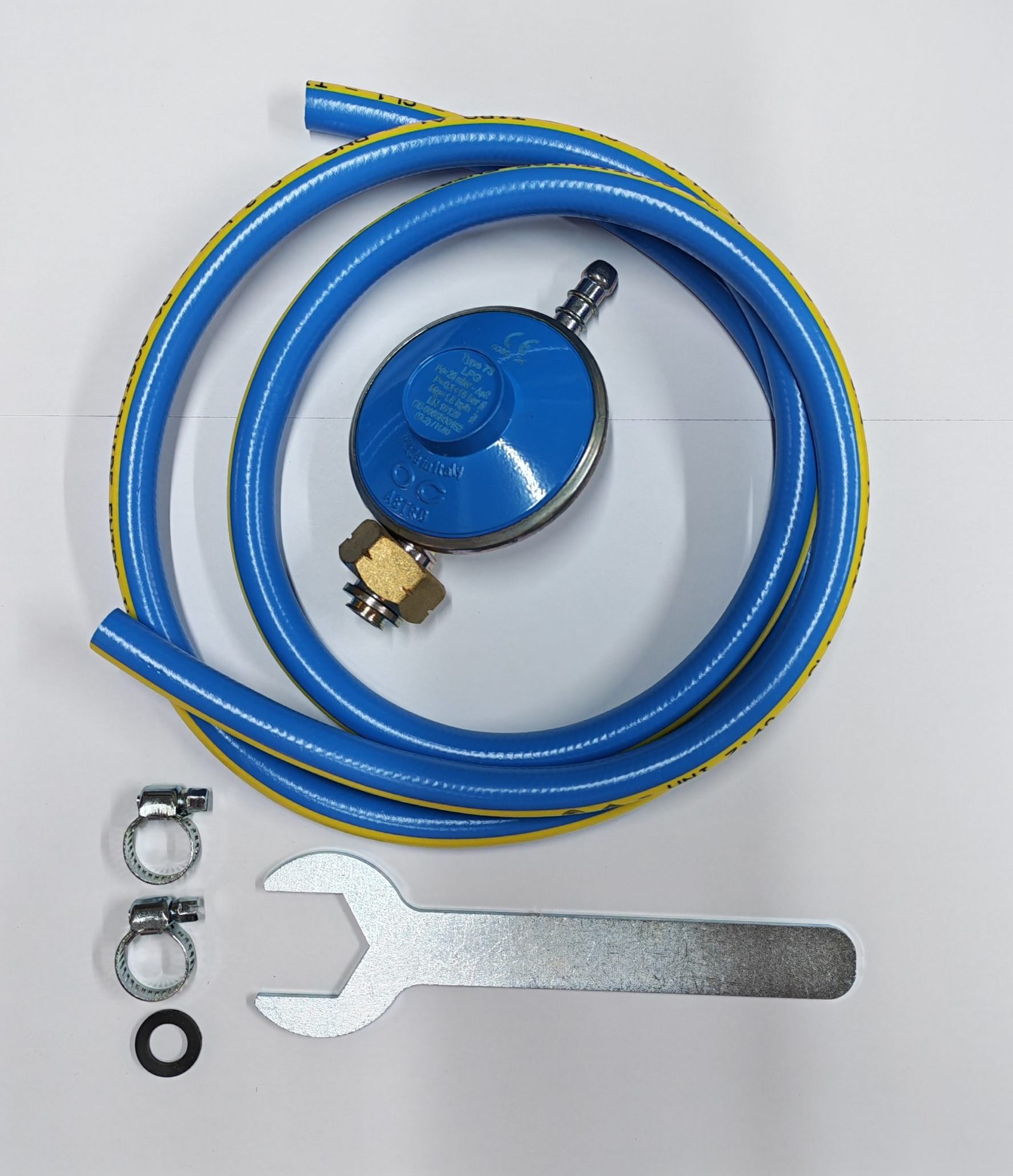
Gas Grill Regulator and Hose – When Should You Replace Them?
“`html
When we talk about gas grills, most of the attention usually goes to the burners, power and cooking surface. The gas regulator and hose tend to stay in the background – until it is time to change the gas cylinder or we start wondering whether a hose that has been in use for several seasons is still in good condition.
In reality, the regulator and hose are important parts of every gas grill connection. It is therefore worth checking them from time to time, especially before the start of the grilling season or when the grill has not been used for a longer period.
This does not need to be complicated. A simple visual inspection can tell you a lot. And when checking the hose, there is one more detail that is easy to overlook: the date markings printed directly on the hose.
The gas hose is a small part that should not be overlooked
The gas hose connects the regulator to the grill and can be exposed to tougher conditions than we sometimes realise.
A grill may spend an entire season outdoors, while the hose is exposed to changing temperatures, sunlight, movement, bending and other environmental influences. Over time, the material naturally ages.
This does not mean that the hose needs to be replaced every season. It does mean that it should be inspected regularly rather than waiting until a problem appears.
When should you replace a gas grill hose?
The first thing we recommend is very simple: check the markings printed on the hose itself.
Gas hoses carry manufacturer information and date markings. On some hoses you will find an expiry date or EXP DATE. If the specified service or expiry date has passed, the hose should be replaced.
Other hoses may show a manufacturing date instead, so it is important to understand the markings on the particular hose you are using and to follow the hose manufacturer’s instructions.
Our advice: when you inspect your grill before the start of the season, take a few extra seconds to read the markings on the hose. This is an easy way to check its age and, where applicable, how long it is intended to remain in service.
Regardless of the date, do not continue using a hose if you notice signs of deterioration or damage.
- There are visible cracks in the hose.
- The rubber has become hard or brittle.
- The hose is damaged, crushed or severely kinked.
- There is damage near either connection point.
- The hose has been heavily exposed to sunlight and weather for a long period.
- The markings are no longer readable or you do not know the age of the hose.
- The marked service or expiry date has passed.
A gas hose is a relatively inexpensive part of the complete grill system. If its service date has passed, its history is unknown or there are visible signs of deterioration, there is little reason to postpone replacement.
What about the gas regulator?
The regulator performs a different job from the hose. Its purpose is to regulate the gas pressure between the gas cylinder and the appliance.
It is important to use a regulator that is suitable for the requirements of the specific gas appliance. A regulator should therefore never be selected simply because it physically fits the gas cylinder.
Always check the requirements specified by the appliance manufacturer and the information provided on the appliance or in its instructions.
The regulator should also be inspected periodically. If it is damaged, heavily corroded, shows other signs of deterioration, or its age and history are unknown, replacement should be considered.
When it comes to a gas connection, saving a few euros on worn or questionable components simply does not make sense.
Take two minutes before the first cook of the season
If your grill has not been used during the winter or has been stored for an extended period, check the gas connection before firing it up again.
Inspect the hose from the regulator all the way to the grill. Pay particular attention to the areas around the connection points, where damage can sometimes develop.
Also check the date and service-life markings on the hose. If the marked service or expiry date has passed, replace the hose before using the grill again.
Make sure the hose:
- is not sharply bent or kinked,
- is not under tension,
- is not trapped between parts of the grill,
- has no visible damage,
- does not come into contact with hot parts of the appliance.
The same quick inspection is useful if you move your grill frequently. Moving the grill can twist the hose or place it in a position that may otherwise go unnoticed.
Check the connection when changing the gas cylinder
Changing a gas cylinder is a normal part of using a gas grill, and it is also a good opportunity to take a quick look at the condition of the regulator and hose.
Check that the connections are correctly fitted and secure and that the hose is positioned properly.
After connecting the gas cylinder or carrying out any work on the gas connection, check the system for leaks according to the instructions provided by the appliance and gas-equipment manufacturers.
Never use a match, lighter or any other open flame to check for gas leaks.
What length of gas hose should you use?
The hose should be long enough that it is not stretched between the gas cylinder and the grill. At the same time, using a much longer hose than necessary is not always the best solution.
For a typical setup where the gas cylinder is positioned close to the grill, several metres of hose are usually unnecessary. Different installations may require a different solution.
Always follow the appliance manufacturer’s instructions and the applicable requirements regarding gas cylinders, regulators, hoses and their placement.
Gas regulators and connections can differ between countries
This is particularly important when a grill is used internationally.
Gas cylinders, regulator connections and applicable requirements are not identical in every country. A regulator or connector that is commonly used in one market may not necessarily be suitable in another.
Before connecting a gas grill, always confirm that the regulator, hose and connection components are suitable for your gas cylinder, the appliance and the applicable requirements in the country where the grill will be used.
If you are unsure, check with your gas supplier or contact us before using the grill.
What is included with a Furlan gas grill?
When you purchase a gas grill through Furlangrills.com, the international product package includes the basic gas connection components, so you do not need to purchase the standard connection set separately.
Complete gas connection set included
The set includes:
- gas regulator,
- 1.5 m rubber gas hose,
- two hose clamps,
- wrench for connecting the regulator to the gas cylinder.
Before using the grill, always check that the supplied regulator and connection components are compatible with your gas cylinder and with the applicable requirements in your country.
The gas cylinder is not included.
If a hose, regulator or another connection component needs to be replaced later, suitable replacement parts are also available from Furlan.
A small check that only takes a few minutes
The regulator and hose are probably not the first things that come to mind when you think about your grill. And that is exactly how it should be – their job is simply to do what they are designed to do while you concentrate on cooking.
But they should not be forgotten completely.
Before the start of the season, after a long period without use and when changing the gas cylinder, take a moment to inspect the connection. Check the markings and date on the hose as well. If the specified service life has passed or you notice damage or signs of deterioration on the hose or regulator, replace the affected component before using the grill.
It is a small part of grill maintenance, but an important one.
If you are unsure which regulator, hose or connection component is suitable for your Furlan grill, you can contact us directly for technical assistance.
Contact Furlan Technical Support
Frequently asked questions
How can I tell how long my gas hose can still be used?
Check the markings printed directly on the hose. Some gas hoses have a service or expiry date marked as EXP DATE. Others may show a manufacturing date instead. Always read the markings carefully and follow the hose manufacturer’s instructions. If the specified service or expiry date has passed, replace the hose.
Should I replace the hose even if its expiry date has not passed?
Yes, if the hose shows signs of damage or deterioration. A cracked, hardened, damaged or otherwise unsuitable hose should not remain in use simply because its marked service date has not yet passed.
Do I need to replace the regulator when I replace the hose?
Not necessarily. If the regulator is suitable for the appliance and remains in good condition, replacing the hose does not automatically mean that the regulator must also be replaced. However, if the regulator is damaged, deteriorated or its age and history are unknown, it should also be checked.
Which regulator do I need for my gas grill?
Use a regulator that meets the requirements specified for your particular gas grill or gas appliance. The physical connection is not the only consideration – the technical requirements of the appliance and local gas-cylinder system must also be taken into account.
Are gas regulators the same in every country?
No. Gas cylinders, connections and applicable requirements can differ between countries. Before use, confirm that the regulator and connection components are suitable for your gas cylinder, appliance and local requirements.
Can I use a lighter to check for a gas leak?
No. Never use a lighter, match or any other open flame to check a gas connection for leaks. Follow the leak-testing procedure specified by the appliance and gas-equipment manufacturers.
Does a Furlan gas grill include a regulator and hose?
Gas grills purchased through Furlangrills.com include the basic gas connection set: a gas regulator, 1.5 m rubber gas hose, two hose clamps and a regulator connection wrench. Before use, check that the supplied components are compatible with your gas cylinder and the applicable requirements in your country.
“`

About author

Related posts
Cleaning your grill plate properly after every use is what keeps it performing well cook after cook — and it’s simpler than most people expect.... Continue reading

Add comment